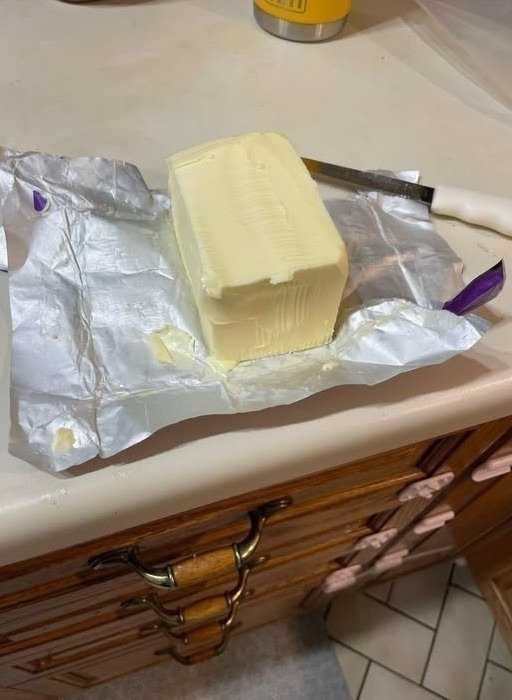
 “Wait—is this safe?” “Isn’t dairy supposed to be refrigerated?” “Could I be spreading bacteria… or worse, rancid butter?”
 Yes, it’s generally safe to leave butter on the counter—if you do it wisely.
 Why Butter Can Survive (and Thrive) at Room Temperature
 Why Butter Can Survive (and Thrive) at Room Temperature
The secret lies in its science-backed simplicity:
High fat, low moisture: Butter is about 80% fat and only 15–18% water. Bacteria need moisture to grow—so butter’s dry environment naturally resists spoilage.
Salt is a preservative: Salted butter (most store-bought sticks) has added salt, which further inhibits microbial growth.
Acidity helps too: Cultured butter or European-style butters have a slightly acidic pH, making them less hospitable to bad bugs.
In short:
Butter doesn’t “go bad” the way other dairy does.
Instead, over time, it may become rancid—a flavor issue, not usually a safety one.
 How Long Can Butter Sit Out Safely?
It depends on your kitchen—and how you store it.
Below 70°F (21°C), covered
Up to
<!–nextpage–>
Up to
1 week
Above 70°F / hot/humid kitchen
 No more than
2–3 days
Unsalted butter
Only
2–3 days max
(no salt = less protection)
Whipped butter
Not recommended (air + moisture = faster spoilage)
 Pro tip: In summer or warm climates, play it safe and keep butter refrigerated.
 How to Store Butter on the Counter Safely
Want soft, spreadable butter without risking quality or safety? Follow these smart tips:
1. Use a Butter Dish with a Lid
Keeps dust, light, and flies away
Prevents odors from the kitchen (looking at you, onion soup)
Choose ceramic or opaque materials to block sunlight (UV speeds rancidity)
2. Try a Butter Bell (or Butter Crock)
This clever French invention uses water as a seal:
Fill the base with cold water
Place butter in the lid (bell-shaped cup)
Submerge the bell into the water—the airtight seal keeps butter fresh
Change water every 2–3 days
Works beautifully for 2–4 weeks if kept cool!
3. Keep It Cool & Dark
Store your butter away from:
Direct sunlight
Stove heat
Dishwashers or ovens
Humid spots (like above the sink)
A drawer or pantry shelf? Perfect.
