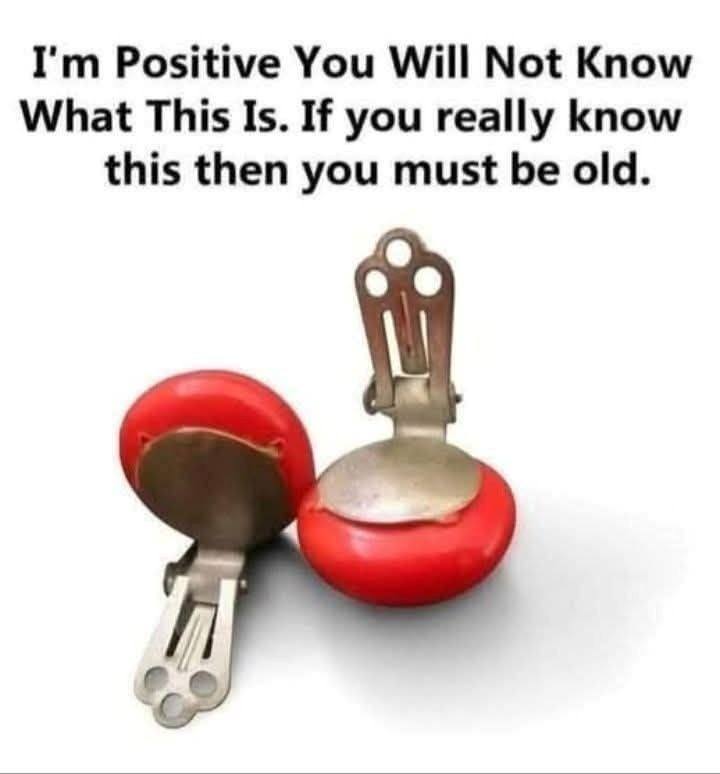
Only True Boomers Know What This Was Really Used For: A Nostalgic Dive into the Vintage Device
If you were born before the internet became a household staple, there’s a good chance you remember a world that functioned very differently. A world where technology was tangible, hands-on, and often accompanied by a satisfying click, whirr, or buzz. Among the many relics of that era, there exists a particular device that most younger generations have never seen—and even if they have, they may never understand what it was really used for. To the uninitiated, it might look like a strange box or an unnecessary gadget, but for Baby Boomers, it evokes memories of everyday life in the 1960s, ’70s, and ’80s. Today, we’re diving deep into this vintage marvel, exploring its purpose, its rise and fall, and the cultural nostalgia it carries.
The Device in Question: The Slide Rule
Before calculators fit into the palm of your hand, there was the slide rule. For many today, the concept of a “manual calculator” might seem quaint or even unnecessary—but for generations of engineers, scientists, and students, the slide rule was a lifeline.
At first glance, the slide rule looks like a long ruler with numbers printed on it. Some models have multiple scales, sliders, or even little magnifiers called cursors. But don’t be fooled by its simplicity: this device could perform complex calculations, from multiplication and division to logarithms and trigonometry. It was, in essence, a pocket-sized gateway to the math that built the modern world.
The Origins of the Slide Rule
The slide rule has a rich history that stretches back centuries. Its conceptual roots trace to the 17th century, shortly after John Napier invented logarithms. These logarithmic principles allowed numbers to be multiplied and divided by adding and subtracting distances along a scale—a breakthrough that eventually inspired the slide rule.
Over the decades, the slide rule evolved from a simple wooden stick with scratched lines to sophisticated models made of plastic, metal, and sometimes exotic materials like bamboo. By the mid-20th century, slide rules were mass-produced, affordable, and considered essential tools for anyone serious about math, science, or engineering.
How It Worked: The Secret Behind the Sliding Magic
To truly appreciate the slide rule, you need to understand how it worked. At its core, it used logarithmic scales to turn multiplication and division into simple addition and subtraction. While it sounds complicated, the process was elegant in its efficiency:
Align the scales: The slide rule has two or more linear scales that slide relative to each other. By aligning one number on the sliding scale with another on the fixed scale, you could start a calculation.
Read the result: The answer appeared on the scale, often requiring a little mental adjustment for decimal placement. This step is why some slide rule users had uncanny instincts for estimating orders of magnitude.
Advanced calculations: Some models included scales for squares, cubes, roots, logarithms, and even trigonometric functions. With practice, a skilled operator could perform calculations that today require a scientific calculator or computer.
Using a slide rule wasn’t just about numbers; it required intuition, spatial awareness, and a steady hand. This tactile interaction with mathematics made the process almost meditative for those who mastered it.
A Day in the Life of a Boomer Using a Slide Rule
Imagine a classroom or an engineering lab in the 1970s. Students sit at wooden desks, pencils in hand, papers filled with equations. On each desk rests a slide rule, a silent partner in intellectual labor. Calculations that might take minutes—or even hours—today were streamlined by the sliding, clicking, and lining up of scales.
Engineers designing bridges or calculating rocket trajectories relied on their slide rules not only for speed but for accuracy. It was a badge of honor to be adept at the device, and teachers often quizzed students on their proficiency. Some Boomers still recall the “mental check” method: even after reading a result from the slide rule, you had to estimate the answer in your head to ensure it made sense.
For many, the slide rule was more than a tool; it was a symbol of competence, intellect, and participation in a rapidly modernizing world.
The Cultural Significance of the Slide Rule
The slide rule was not just a tool—it was a cultural icon of an era defined by curiosity, ingenuity, and expansion of knowledge. It appeared in classrooms, corporate offices, and NASA control rooms. Famously, the engineers who designed the Apollo missions used slide rules alongside computers to calculate trajectories that sent humans to the Moon.
This device also had a social dimension. Among students and professionals, knowing how to use a slide rule could signify belonging. Newcomers often received their first slide rule as a rite of passage, sometimes accompanied by a book of instructions or a mentor’s guidance. Mastering it was a shared experience that connected peers across schools and industries.
Even advertising of the era recognized its importance. Companies like Keuffel & Esser (K&E) marketed slide rules as indispensable instruments for serious work, highlighting their precision, reliability, and elegance. Owning a K&E slide rule was not just practical—it was aspirational.
The Decline: How Calculators Changed Everything
By the 1970s, a quiet revolution began. Electronic calculators started to emerge, initially bulky and expensive, but rapidly becoming more affordable and portable. With push-button operation and instant results, calculators threatened to make the slide rule obsolete.
For Boomers, this transition was bittersweet. On one hand, calculators simplified tedious calculations; on the other hand, they removed the tactile and mental engagement that made slide rule mastery a point of pride. By the early 1980s, the slide rule had largely disappeared from classrooms and workplaces, replaced by devices that required little more than pressing a button.
Yet, even as the slide rule faded from everyday life, it remained a cherished memory for those who grew up using it. Some kept their old rules as mementos, symbols of a time when skill and intuition were as important as the tools themselves.
Why Millennials and Gen Z Rarely Recognize It
Walk into a high school math class today, and students are more likely to pull out a smartphone than a slide rule. The concept of manually aligning scales to perform calculations seems alien, almost retro. Without exposure to the device, younger generations might confuse it for a ruler, a measuring device, or a toy.
This disconnect highlights a broader trend: rapid technological change often leaves physical artifacts behind, creating a “cultural gap” between generations. For Boomers, these artifacts carry stories, lessons, and nostalgia. For younger people, they can seem like relics from a foreign world.
Fun Stories and Anecdotes
Every Boomer with a slide rule has at least one story about it. Some common tales include:
The Panic in the Exam Room: Students accidentally sliding the cursor the wrong way and watching their carefully calculated answer turn into nonsense. A moment of horror followed by quick mental recovery.
The Gift Slide Rule: Many students received their first slide rule as a graduation gift from a parent or mentor, accompanied by words of encouragement: “Now you’re ready to build the world.”
Engineering Ingenuity: In NASA’s early space program, engineers sometimes used slide rules to double-check computer calculations, proving that human skill could complement technology.
These anecdotes capture the humor, pride, and hands-on problem-solving that characterized the slide rule era.
Collecting Slide Rules Today
Interestingly, slide rules have experienced a resurgence among collectors and enthusiasts. Vintage models are sought after not just for their historical value but also for their craftsmanship. Some feature intricate designs, polished wood, and precision-printed scales. For collectors, owning a slide rule is like holding a piece of intellectual history—a reminder of a time when skill and understanding mattered as much as technology itself.
Online communities share tips for restoring old slide rules, identifying rare models, and even practicing calculations for fun. It’s a niche hobby, but one that keeps the memory of the device alive for new generations curious about the past.
Lessons from the Slide Rule Era
The story of the slide rule offers broader lessons about technology, learning, and cultural memory:
Mastery Requires Engagement: Using a slide rule wasn’t about lazily pressing buttons. It demanded attention, understanding, and intuition—qualities that fostered deep learning.
Tools Shape Thought: The physical act of sliding scales and estimating results influenced the way people approached problems. Our tools don’t just help us—they shape our thinking.
Nostalgia Holds Meaning: Even obsolete technology can carry emotional and cultural significance. The slide rule isn’t just a calculating device; it’s a symbol of an era and a mindset.
Progress Isn’t Always Linear: Calculators and computers surpassed the slide rule in efficiency, but they also removed an element of skill and engagement. New technology brings gains—but sometimes at the cost of intimacy with the process.
Conclusion: A Legacy That Endures
Today, the slide rule sits in museums, collector cabinets, and memory-laden drawers. It’s a strange, fascinating device that many younger people have never seen—and yet, for Boomers, it evokes vivid memories of learning, achievement, and human ingenuity. Its scales, sliders, and cursors tell stories of classrooms, laboratories, and even space missions. It reminds us that the tools we use shape how we think, what we value, and how we remember the past.
So the next time you stumble upon a mysterious sliding ruler tucked away in an attic or thrift store, pause and admire it. Only true Boomers know what it was really used for—and now, through understanding its history, we can all appreciate the magic of this vintage marvel.
